Is Jacksonville a Good Place to Buy a Home in 2026?
Is Jacksonville a Good Place to Buy a Home in 2026?
If you're thinking about buying a home in Jacksonville, Florida, in 2026, you may be asking a very reasonable question: Is now actually a good time to buy?
The short answer is: Jacksonville can still be an excellent place to buy a home in 2026—but whether it's the right time for you depends more on your finances, timeline, and goals than on trying to perfectly time the market.
The Jacksonville housing market has changed significantly from the frenzied conditions buyers experienced a few years ago. Buyers have more opportunities to negotiate, but affordability is still a major consideration because mortgage rates remain elevated.
At the same time, Jacksonville continues to offer something that makes the area attractive to homebuyers: a wide range of housing options, diverse neighborhoods, access to beaches and outdoor recreation, and a cost of living that can still be competitive with many other major Florida markets.
So, should you buy a home in Jacksonville in 2026? Let's look at what buyers need to know.
What Is the Jacksonville Housing Market Like in 2026?
The Jacksonville housing market is not the same market we saw during the pandemic-era buying frenzy.
According to Zillow, the typical Jacksonville home value was approximately $286,646 as of July 31, 2026, down 1.3% from the previous year. Zillow also reported a median sale price of approximately $283,333 and a median list price of $295,000. Homes were going pending in roughly 38 days.
Redfin's data tells a slightly different story because its methodology and reporting period differ. For the three months ending in June 2026, Redfin reported a Jacksonville median sale price of approximately $310,000, up 1.9% year over year, with homes averaging 56 days on the market.
The difference between these numbers is a good reminder that there isn't one single number that perfectly describes the Jacksonville real estate market. Values and market conditions can vary considerably by neighborhood, property type, price range, and location.
The Jacksonville market is increasingly a neighborhood-by-neighborhood market.
That is important for buyers.
A home in Mandarin may behave differently from a home in Riverside. A Jacksonville Beach property may have completely different dynamics from a home farther west. New construction in a growing area can also compete differently with existing homes.
That's why looking only at the overall Jacksonville median price isn't enough when deciding whether to buy.
Are Jacksonville Home Prices Going Down in 2026?
This is one of the biggest questions we're hearing from prospective buyers.
The answer isn't as simple as "prices are falling" or "prices are going up."
Some Jacksonville home values have declined compared with the previous year, while other areas and price ranges have continued to see price growth. Zillow's July data showed a 1.3% year-over-year decline in its typical Jacksonville home value, while Redfin's June data showed a 1.9% year-over-year increase in its median sale price.
What does that mean for a buyer?
It means buyers should stop looking for one universal Jacksonville housing-market trend.
Instead, ask:
- What are comparable homes selling for in the neighborhood I'm targeting?
- How long are those homes staying on the market?
- Are sellers reducing their prices?
- How much competition is there?
- Are homes selling at, above, or below asking price?
- What is happening with inventory in my price range?
- Are new construction homes competing with resale properties?
Those questions provide much more useful information than a national headline about whether home prices are rising or falling.
Buyers Have More Negotiating Power Than They Did a Few Years Ago
One of the biggest advantages for Jacksonville buyers in 2026 is that the market is no longer defined by the extreme competition that many buyers experienced earlier in the decade.
Zillow reported that 60% of Jacksonville sales were closing below the list price as of June 2026, while 17.9% were selling above list price.
That doesn't mean every seller will negotiate.
It does mean buyers may have opportunities that were much harder to find in a highly competitive market.
Depending on the property, buyers may be able to negotiate on:
- Purchase price
- Closing costs
- Repairs
- Seller concessions
- Interest-rate buydowns
- Home warranties
- Closing dates
- Inspection-related items
This is where having an experienced Jacksonville real estate agent can make a meaningful difference.
The goal isn't simply to get the seller to accept a lower price.
The goal is to structure the strongest overall deal.
A $10,000 price reduction isn't necessarily better than a seller-paid closing-cost concession, for example. The best strategy depends on the buyer's financing, cash position, interest rate, and long-term plans.
What About Mortgage Rates in 2026?
Mortgage rates are one of the biggest reasons some buyers are hesitant to purchase right now.
As of August 26, 2026, the average 30-year fixed mortgage rate was around 6.70%, according to Bankrate data reported by The Wall Street Journal.
That's significantly higher than the ultra-low mortgage rates buyers became accustomed to during the pandemic.
But there's an important distinction:
A high mortgage rate doesn't automatically mean buying a home is a bad decision.
It means buyers need to pay closer attention to the complete monthly payment.
Your actual housing cost can include:
- Principal and interest
- Property taxes
- Homeowners insurance
- HOA fees
- Flood insurance, if applicable
- Maintenance
- Utilities
For Jacksonville buyers in particular, insurance and flood considerations can vary substantially depending on the property's location and characteristics.
Instead of asking, "Will mortgage rates fall?"
A better question may be:
"Can I comfortably afford this home at today's rate?"
If the answer is yes, you can make your purchase based on your actual financial situation rather than a prediction about what mortgage rates might do six months from now.
And if rates eventually fall, refinancing may become an option—assuming your financial situation and the future market make refinancing worthwhile.
Should You Wait for Mortgage Rates to Drop?
This is another question we hear frequently.
Nobody can guarantee exactly where mortgage rates will be six months or one year from now.
Current rates remain influenced by inflation, Treasury yields, economic conditions, and other factors. Recent national housing data continues to show that elevated mortgage rates are weighing on buyer demand.
Waiting can make sense for some buyers.
For example, if buying today would stretch your budget too far, it may be better to improve your financial position before purchasing.
But waiting solely because you're hoping for a lower mortgage rate can also backfire.
If rates fall, more buyers may return to the market. That could increase competition and potentially push prices higher in desirable areas.
There is no guaranteed "perfect" moment to buy.
The best time to buy is generally when the home, price, financing, and your personal financial situation all make sense together.
Why Jacksonville Continues to Attract Homebuyers
There is a reason Jacksonville continues to attract people looking for a place to live.
The city offers an unusually broad range of lifestyles and housing options.
Buyers can choose from established neighborhoods, suburban communities, townhomes, condominiums, new construction, waterfront properties, and homes near the beaches.
Some buyers want the walkability and character of neighborhoods such as Riverside and Avondale.
Others prefer the newer homes, amenities, and suburban lifestyle available in areas around St. Johns County and Nocatee.
Others want to be closer to the ocean in Jacksonville Beach, Neptune Beach, or Atlantic Beach.
And some buyers prioritize affordability and space farther from the urban core.
That variety is one of Jacksonville's biggest advantages.
There isn't one "Jacksonville lifestyle."
There are many.
Jacksonville Neighborhoods Can Have Very Different Real Estate Markets
One of the most important things to understand before buying in Jacksonville is that the city is enormous.
The right neighborhood for one buyer may be completely wrong for another.
For example, a buyer looking for a walkable lifestyle may prioritize a very different area than a buyer looking for a large yard, newer construction, or proximity to major employment centers.
Some areas buyers may want to explore include:
Mandarin
Mandarin is popular with buyers looking for established residential communities, larger homes, mature landscaping, and access to shopping, restaurants, and major roadways.
San Marco
San Marco appeals to buyers who want proximity to downtown, restaurants, shops, historic architecture, and a more established urban neighborhood feel.
Riverside & Avondale
These historic neighborhoods are known for distinctive architecture, local businesses, restaurants, parks, and proximity to downtown Jacksonville.
Jacksonville Beaches
Jacksonville Beach, Neptune Beach, and Atlantic Beach offer a coastal lifestyle that continues to attract buyers who prioritize proximity to the ocean and beach communities.
Southside
Southside offers a mix of established neighborhoods, newer developments, apartments, townhomes, and single-family homes, with convenient access to shopping, employment centers, and major roadways.
St. Johns County & Nocatee
For buyers prioritizing newer construction, planned communities, amenities, and access to St. Johns County schools, areas such as Nocatee and the surrounding St. Johns County communities are worth considering.
The important thing is not choosing the "best" Jacksonville neighborhood.
It's finding the best neighborhood for your budget, lifestyle, commute, and long-term plans.
Is Jacksonville Affordable Compared With Other Florida Markets?
Affordability is one of Jacksonville's advantages, although buyers should be careful about comparing cities using home prices alone.
Housing costs are only one part of the equation.
Buyers should consider:
- Home prices
- Property taxes
- Homeowners insurance
- Flood insurance
- HOA fees
- Commute
- Utilities
- Maintenance
- Future resale potential
Jacksonville's broad housing inventory means buyers can often find a much wider range of price points and property types than they might in some of Florida's more expensive coastal markets.
That doesn't mean every Jacksonville home is affordable.
It means there are more options to match different budgets and lifestyles.
What Should Jacksonville Buyers Look for in 2026?
If you're shopping for a Jacksonville home this year, don't just focus on the list price.
Pay attention to the entire property.
1. Insurance costs
Before falling in love with a house, find out what insurance is likely to cost.
Insurance can have a meaningful impact on your monthly payment.
2. Flood risk
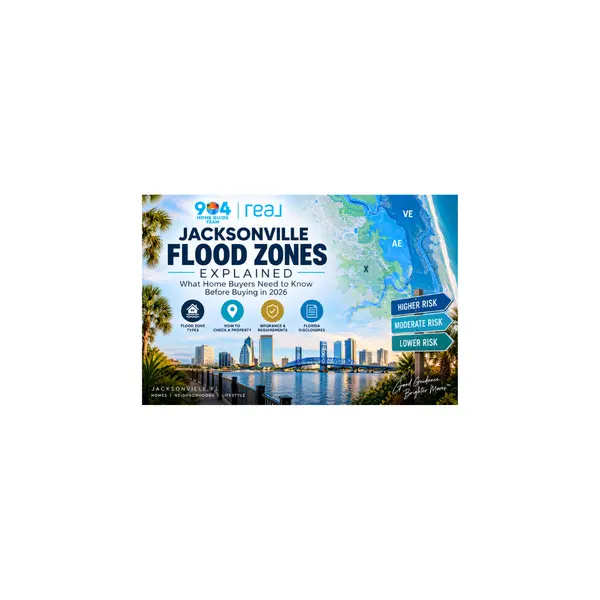
Jacksonville has a variety of elevations and drainage environments, and flood risk can vary significantly from one property to another.
Check the property's flood zone and discuss insurance requirements with your insurance professional.
3. Property condition
A house that looks like a bargain may require significant repairs.
Pay close attention to the roof, HVAC system, plumbing, electrical systems, foundation, windows, and other major components.
4. HOA fees and restrictions
If you're buying in an HOA community, understand the fees and restrictions before making an offer.
5. Location
You can change a kitchen.
You can't move the house.
Consider traffic, commute times, nearby development, schools if relevant to your household, amenities, and the surrounding neighborhood.
6. Resale potential
Even if you plan to stay for many years, consider how attractive the property might be to a future buyer.
So, Is Jacksonville a Good Place to Buy a Home in 2026?
For the right buyer, yes.
Jacksonville's 2026 market offers a combination that buyers should pay attention to:
- More negotiating opportunities than during the peak seller's-market years
- A wide variety of neighborhoods and housing types
- A broad range of price points
- Opportunities for buyers who are patient and strategic
- Continued demand for desirable locations
- The ability to evaluate properties without assuming every home will receive multiple offers immediately
But buying a home in Jacksonville in 2026 isn't about trying to predict the exact bottom of the market.
It's about buying the right home at a price and payment that make sense for you.
If you're financially prepared, plan to own the home for several years, have a manageable monthly payment, and find a property that fits your needs, today's market can offer opportunities.
If buying would stretch your finances too far, there is nothing wrong with waiting.
Thinking About Buying a Home in Jacksonville?
If you're considering buying a home in Jacksonville, the first step doesn't have to be making an offer.
Start by figuring out what you can comfortably afford, where you want to live, and what the current market looks like in your specific price range.
A local Jacksonville real estate professional can help you compare neighborhoods, evaluate comparable sales, identify properties that fit your goals, and negotiate the terms of your purchase.
The Jacksonville housing market is changing—and the right strategy for a buyer in 2026 may look very different from the strategy that worked a few years ago.
If you're thinking about buying a home in Jacksonville, reach out to Mike and the 904 Home Guide team for a personalized conversation about the current market and what your options look like.
Categories
Recent Posts