How Much Money Do You Need to Buy a House in Jacksonville, FL?
How Much Money Do You Need to Buy a House in Jacksonville, FL in 2026?
One of the biggest misconceptions about buying a home is that you need 20% down.
In reality, many Jacksonville buyers can purchase a home with far less upfront cash depending on the loan program, credit profile, income, property and available assistance programs.
Some conventional loan programs allow down payments as low as 3%, FHA financing can allow 3.5% down in many cases, VA financing may require no down payment for eligible borrowers, and USDA financing can offer 100% financing on eligible properties for qualified buyers.
But here is the part many buyers do not realize:
Your down payment is not the same thing as the total amount of cash you may need to buy a home.
Jacksonville buyers may also need money for closing costs, inspections, appraisal-related expenses, homeowners insurance, escrow deposits, prepaid taxes and insurance, and other transaction expenses.
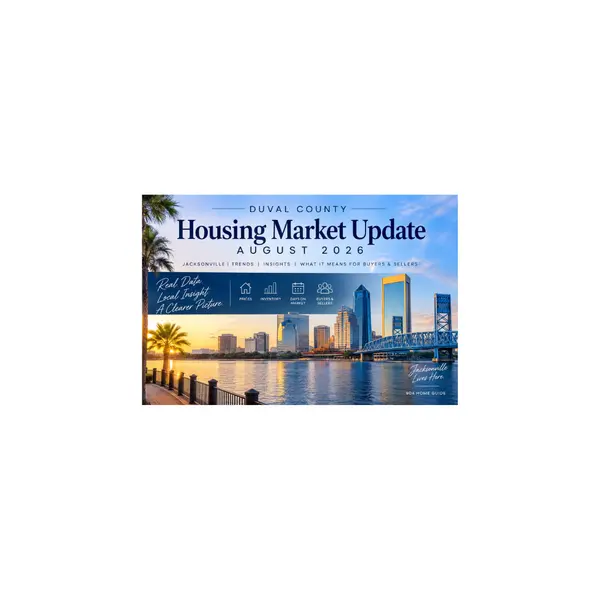
Home prices also play a major role in how much buyers need to save. See our latest Duval County housing market update for current Jacksonville-area pricing, inventory and sales trends.
So how much should you actually save?
Let's break it down.
How Much Is a Down Payment on a House in Jacksonville?
The answer depends largely on your mortgage.
Conventional Loans: As Little as 3% Down
Some conventional mortgage programs allow eligible borrowers to put as little as 3% down.
Fannie Mae's HomeReady program and Freddie Mac's Home Possible program both offer qualified borrowers options with down payments as low as 3%.
For example:
| Jacksonville Home Price | 3% Down Payment |
|---|---|
| $250,000 | $7,500 |
| $300,000 | $9,000 |
| $335,000 | $10,050 |
| $400,000 | $12,000 |
| $500,000 | $15,000 |
That is considerably different from the often-repeated idea that a buyer needs 20% down.
Freddie Mac notes that buyers typically put down somewhere between 5% and 20%, but certain mortgage options allow down payments as low as 3%. Buyers putting less than 20% down on conventional financing will generally have private mortgage insurance, or PMI, until applicable cancellation requirements are met.
FHA Loans: 3.5% Down in Many Cases
FHA financing is another common option for buyers who don't have a large down payment saved.
HUD states that the FHA minimum required investment is 3.5% in most cases, and those funds can come from acceptable sources that may include the borrower's own funds, gifts, certain second mortgages and down-payment assistance programs.
Here's what 3.5% looks like:
| Home Price | 3.5% Down |
|---|---|
| $250,000 | $8,750 |
| $300,000 | $10,500 |
| $335,000 | $11,725 |
| $400,000 | $14,000 |
FHA financing also comes with mortgage insurance requirements, so buyers should evaluate the entire monthly payment, not simply the upfront down payment.
VA Loans: Potentially $0 Down
This can be especially relevant in Jacksonville because of Northeast Florida's large military community.
Eligible veterans, active-duty service members and certain surviving spouses may qualify for a VA-backed home loan.
The VA does not require a down payment as long as the sales price does not exceed the appraised value, although individual lender requirements and a borrower's available VA entitlement can affect a particular transaction. VA-backed loans also generally do not require private mortgage insurance.
That means an eligible buyer purchasing a $350,000 home may potentially finance the entire purchase price rather than bringing tens of thousands of dollars for a traditional down payment.
VA borrowers may still have closing costs and, unless exempt, a VA funding fee.
USDA Loans: Another Potential 0% Down Option
USDA's Single Family Housing Guaranteed Loan Program allows eligible buyers purchasing qualifying properties in eligible rural areas to receive 100% financing with no down payment.
USDA financing is income- and location-dependent, so it isn't available for every Jacksonville-area property.
However, buyers searching outside the urban core or in certain surrounding Northeast Florida communities should ask their lender whether a property could qualify.
USDA specifically states that the guaranteed program is available to eligible low- and moderate-income households purchasing qualifying primary residences in eligible areas.
What About Closing Costs?
This is where buyers sometimes get surprised.
A buyer may hear:
“You only need 3% down.”
and assume that means a $300,000 home requires exactly $9,000 in cash.
Not necessarily.
The down payment is only one portion of the buyer's total cash requirement.
Jacksonville buyer closing expenses can include:
- lender origination and underwriting charges
- appraisal
- credit and loan-related fees
- title and settlement expenses
- recording fees
- prepaid homeowners insurance
- property tax reserves
- prepaid mortgage interest
- escrow deposits
The exact allocation of title and other transaction costs can also depend on the purchase contract and negotiations between the parties.
Your lender will provide a Loan Estimate early in the mortgage process and a Closing Disclosure before closing that lays out your specific charges.
A Realistic Jacksonville Example
Let's say you're purchasing a $335,000 home.
That number is particularly useful because the August 2026 median sales price for a Duval County single-family home was $335,000.
Scenario 1: 3% Conventional Down
Purchase price: $335,000
3% down payment:
$10,050
Then you would still budget for closing costs and prepaid expenses.
If your closing-related costs totaled, hypothetically, another $8,000 to $12,000, your gross cash requirement could potentially be somewhere around:
$18,050 to $22,050
But that's before considering seller concessions, lender credits, assistance programs, earnest money already deposited or other credits.
That distinction matters.
A buyer's final amount due at closing could be substantially different from the simple estimate above.
Scenario 2: FHA at 3.5%
Purchase price: $335,000
3.5% down:
$11,725
Again, closing costs and prepaid items would generally be additional unless covered through negotiated credits or assistance.
Scenario 3: Eligible VA Buyer
Purchase price: $335,000
Required VA down payment could potentially be:
$0
That does not necessarily mean $0 cash needed for the entire transaction.
The buyer may still have inspections, closing costs, prepaid items and other expenses depending on the loan and contract.
This is why asking:
“How much is the down payment?”
and asking:
“How much cash will I actually need to buy this house?”
are two different questions.
Don't Forget the Binder Deposit
In Northeast Florida real estate transactions, buyers will often make an earnest money deposit, sometimes referred to locally as the binder deposit.
This money is typically deposited after the contract is accepted according to the deadlines in the purchase agreement.
Importantly, earnest money is generally not an extra fee added on top of your purchase price.
If the transaction closes, it is normally credited toward the amount the buyer owes at closing.
For example, if your eventual cash-to-close were $20,000 and you had already deposited $5,000 in earnest money, that deposit would generally appear as a credit toward your required funds.
The amount and deadlines depend on the individual contract.
You'll Probably Spend Some Money Before Closing Too
There are also expenses that can happen before closing day.
Home Inspection
A general home inspection gives buyers an opportunity to better understand the condition of the property.
Depending on the house and circumstances, buyers may also choose or need additional inspections such as:
- wood-destroying organism inspection
- sewer or septic inspection
- well inspection
- pool inspection
- mold testing
- roof evaluation
- specialized electrical or structural inspections
These expenses may be paid before closing and therefore might not appear as part of your final cash-to-close figure.
Appraisal
When financing a home, the lender typically requires an appraisal.
Whether the appraisal fee is collected upfront or included among other lender charges depends on the lender.
Insurance Inspections
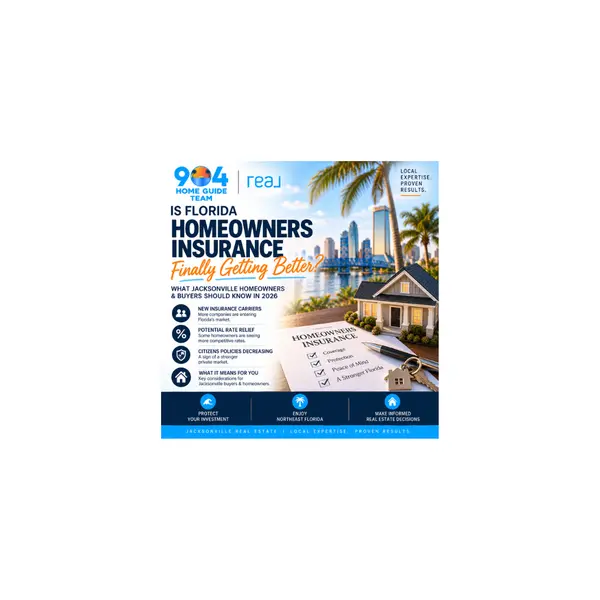
Florida insurance deserves special attention.
Depending on the age and condition of the property, your insurance carrier may request a 4-point inspection, wind mitigation inspection, or other property information before issuing coverage.
This is particularly important because homeowners insurance isn't just something to deal with after buying the house.
For most financed purchases, acceptable coverage needs to be in place before closing.
Homeowners Insurance Can Affect How Much House You Can Afford
Two Jacksonville homes with the exact same purchase price can have very different monthly ownership costs.
Why?
One may have:
- a newer roof
- stronger wind-mitigation features
- updated plumbing
- updated electrical
- lower flood exposure
while the other does not.
That can produce dramatically different insurance quotes.
Because homeowners insurance is typically included in the borrower's projected monthly housing expense when escrowed, a higher insurance premium can also affect mortgage qualification.
That is why Jacksonville buyers should investigate home insurance early in the contract period, not the day before closing.
Property Taxes Matter Too
Your mortgage payment isn't simply principal and interest.
For many Jacksonville homeowners, the full monthly housing payment may include:
Principal + Interest + Property Taxes + Homeowners Insurance + HOA/CDD + Mortgage Insurance
depending on the property and financing.
Florida buyers should also be cautious about estimating future taxes based solely on what the current homeowner pays.
The existing owner's taxable value may reflect years of homestead protections or other exemptions.
After a sale, the taxable value can change.
Your lender, real estate agent and appropriate tax resources can help you build a more realistic estimate.
HOA and CDD Fees Can Change the Budget
Jacksonville and surrounding Northeast Florida communities include everything from older neighborhoods with no association to newer master-planned communities with HOA and Community Development District fees.
Those costs don't necessarily increase your down payment.
But they absolutely affect how much home you can comfortably afford.
A $350,000 home with substantial HOA/CDD expenses could carry a higher total monthly obligation than another $350,000 property without them.
That is why buyers should compare monthly ownership cost, not just purchase price.
Can Jacksonville Buyers Get Down Payment Assistance in 2026?
Potentially, yes.
And this is one of the most important parts of this guide.
There are both Florida statewide programs and local Jacksonville programs that may help eligible buyers.
Florida Hometown Heroes Program
Florida's 2026 Hometown Heroes Housing Program provides eligible borrowers with down-payment and closing-cost assistance.
For 2026, Florida Housing says eligible workers include certain:
- health care workers
- school staff
- first responders
- public-safety and court employees
- child-care workers
- military service members
- reservists
- Florida National Guard members
- certain veterans
Eligible borrowers may receive up to 5% of the first mortgage amount, subject to a $35,000 maximum and $10,000 minimum, toward down payment and closing costs.
The assistance is structured as a 0% interest, non-amortizing, 30-year deferred second mortgage.
It is not a grant and is not forgivable. The balance generally becomes due when the property is sold, the first mortgage is refinanced, the deed is transferred, or the borrower no longer occupies the home as a primary residence.
Eligibility rules and funding availability matter, so buyers should verify current availability with an approved participating lender.
Florida Housing Down Payment Assistance
Florida Housing also offers other assistance options for eligible borrowers.
One current program is the Florida Homeownership Loan Program, or FL HLP, which offers a $12,500 second mortgage at 3% interest over 30 years.
Florida Housing also lists conventional assistance programs providing 3%, 4% or 5% of the first mortgage amount through forgivable second mortgages when paired with certain qualifying Florida Housing conventional mortgage products.
Again, eligibility and program terms vary.
Jacksonville Headstart to Homeownership
Jacksonville buyers may also have a local option.
The City of Jacksonville's Headstart to Homeownership Program, often called H2H, offers eligible households up to $25,000 in down-payment and closing-cost assistance.
Applicants must meet income requirements, purchase an eligible primary residence and satisfy other program requirements.
The City specifically warns applicants not to sign a sales contract before being approved for the program. Funding is also subject to availability.
That's extremely important.
If you think you could qualify for Jacksonville down-payment assistance, investigate the program before writing an offer.
Jacksonville Also Has a Down-Payment Assistance Pilot
The City has also published information for a local Down-Payment Assistance Home Ownership Pilot Program.
That program can provide eligible buyers with assistance of up to 75% of the required down payment or closing costs, capped at $25,000, subject to program requirements and available funding.
Because local housing programs can change as funding is allocated or exhausted, buyers should verify current availability directly with the City or an approved lender before relying on assistance in their purchase budget.
So How Much Should You Save Before Buying a Jacksonville Home?
There isn't one magic number.
A buyer purchasing the same $335,000 house could potentially need dramatically different amounts depending on the financing.
Someone using a low-down-payment conventional mortgage might need thousands toward a down payment plus closing costs.
An eligible VA buyer might have no required down payment.
A buyer qualifying for substantial down-payment assistance could have a very different cash requirement.
And a buyer choosing to put 20% down could voluntarily bring $67,000 toward that same $335,000 purchase.
The smartest first step isn't picking an arbitrary savings goal.
It's determining:
- Which mortgage programs you qualify for
- Approximately how much home you can comfortably afford
- What your estimated monthly payment would be
- Whether assistance programs are available
- How much cash your specific loan scenario requires
Once you know your budget, you can start exploring Jacksonville homes for sale that fit your price range and monthly-payment goals.
Then you can build a savings target based on reality.
Don't Empty Your Savings Account Just to Buy the House
Even if a lender says you can bring nearly all of your available savings to closing, that doesn't automatically mean you should.
Homeownership comes with expenses.
After closing, you could need money for:
- moving
- furniture
- utility deposits
- repairs
- appliances
- landscaping
- unexpected maintenance
- insurance deductibles
- emergency expenses
Buying the house is only the beginning.
Whenever possible, buyers should think beyond:
“Can I close?”
and ask:
“Will I still be financially comfortable after I close?”
What If You Don't Have Enough Saved Yet?
Don't automatically assume homeownership is years away.
Talk with a knowledgeable lender and real estate professional before deciding you aren't ready.
You might discover that you qualify for a lower-down-payment mortgage, down-payment assistance or other programs you didn't know existed.
Or you may discover that waiting six months while improving credit and saving additional money puts you in a significantly stronger position.
Either result is useful.
Knowing where you stand gives you something much better than guessing:
a plan.
Still deciding whether now is the right time to buy? See our guide on whether you should buy a house in Jacksonville now or wait until 2027.
Ready to Buy a Home in Jacksonville?
If you're wondering how much money you need to buy a home in Jacksonville, your answer depends on far more than the listing price.
Financing, down payment, insurance, taxes, property condition, closing costs and available assistance all play a role.
The 904 Home Guide Team | Real Broker, LLC helps buyers throughout Jacksonville and Northeast Florida understand the entire buying process—from determining what areas and homes fit their budget to negotiating a contract and getting all the way to closing.
Whether you're preparing for your first home, relocating to Jacksonville, using VA financing or simply trying to understand whether you're financially ready to buy, we'll help you build a strategy around your actual goals.
Ready to see what your Jacksonville home-buying budget can look like? Contact the 904 Home Guide Team to start the conversation.
Categories
Recent Posts