Florida Amendment 3 Passed: What Jacksonville Homeowners and Buyers Need to Know
Florida Amendment 3 Passed: What Jacksonville Homeowners and Buyers Need to Know
Florida voters approved Amendment 3 on November 3, 2026, bringing changes to property taxes that deserve attention whether you own your home, plan to buy, or hold investment property.
For qualifying homeowners, the amendment expands the homestead exemption for non-school property taxes beginning in 2027. For owners of covered non-homestead properties, it lowers the annual assessment growth cap.
But what does that mean for your actual housing costs?
Alex with Market Distillery recently shared a breakdown of the changes, including an estimate that many Northeast Florida homeowners could see roughly $2,000 in annual savings once the larger exemption takes effect in 2028.
That is a useful planning estimate, but it is not a guaranteed reduction for every property.
Here is how to understand the changes and the questions to ask before adjusting your budget.
Updated November 4, 2026. Reported results show Amendment 3 above the required 60% approval threshold. Election results remain unofficial pending certification.
What Changed With Amendment 3?
Amendment 3 increases the amount of assessed value exempt from non-school property taxes for eligible homestead properties.
| Tax year | Expanded exemption for eligible homestead property |
|---|---|
| 2027 | Up to $150,000 of assessed value for non-school taxes |
| 2028 | Up to $250,000 of assessed value for non-school taxes |
| 2029 onward | Adjustments for positive inflation begin |
The amendment takes effect January 1, 2027.
The exemption reduces the property value subject to applicable taxes. It does not represent a payment to the homeowner or a dollar for dollar reduction in the tax bill.
Our earlier guide to Jacksonville property taxes and Amendment 3 explains the proposal and the underlying property tax system. This article focuses on what its passage means for your next steps.
If You Already Own Your Primary Residence in Florida
For qualifying homeowners, the larger homestead exemption is the central benefit.
In his November 4 Market Distillery breakdown, Alex estimates that the expanded exemption could translate into approximately $2,000 in annual savings for many Northeast Florida homeowners by 2028.
For perspective, $2,000 annually is about $167 per month when spread across a year. That does not mean your mortgage payment will automatically decrease by that amount.
Your actual benefit depends on:
-
Your property’s assessed value.
-
Your eligibility for the expanded exemption.
-
Other exemptions that apply.
-
The applicable non-school tax rates.
-
Changes in assessments and rates over time.
A property with assessed value within the expanded exemption could have no taxable value remaining for covered non-school levies. School taxes and separate assessments can still remain.
Confirm Your Homestead Exemption Is Recorded
Alex also highlights a practical issue: some homeowners assume they have homestead when they have not completed the application or confirmed approval.
Check your property record, especially if you recently purchased, inherited a property, or changed how you use it.
The larger exemption still depends on meeting the applicable requirements. Ownership alone does not establish eligibility.
Does Amendment 3 Eliminate School Taxes or Other Charges?
No. The expanded exemption applies to non-school property taxes.
It does not expand the exemption for school district taxes, and it does not automatically remove separate assessments for services or improvements.
Market Distillery emphasizes that school taxes remain a meaningful part of the bill. The exact share varies by property and taxing jurisdiction, so homeowners should review their own bill rather than assume a fixed percentage.
Your total bill may also include non-ad valorem assessments, such as certain service charges or community development district assessments.
This is why a larger exemption can provide relief without eliminating the entire bill.
If You Own a Second Home in Florida
Second home owners generally do not receive the expanded homestead exemption unless the property becomes a qualifying permanent residence.
Alex’s analysis raises a relevant planning question for owners already considering making Florida their permanent home: how would that change affect their property tax eligibility?
The amendment distinguishes between people who are permanent Florida residents by December 31, 2026, and those who establish residency afterward.
Qualifying residents established by that date can access the expanded exemption when they establish an eligible homestead. For later arrivals, access to the larger benefit generally begins in the fifth year of receiving the homestead exemption, subject to constitutional requirements.
The cutoff concerns permanent residency, not simply the date you purchase a home.
Buying property, spending more time here, and establishing a qualifying permanent residence are different matters. Confirm your circumstances with the property appraiser and appropriate advisers before relying on a benefit.
If You Own Rental or Investment Property
The expanded homeowner exemption is intended for qualifying homestead property.
However, Amendment 3 also lowers the annual assessment growth cap for covered non-homestead properties from 10% to 5% for non-school taxes.
Market Distillery identifies this as a potential improvement in expense predictability for investors.
The distinction is important: the cap applies to assessed value growth under the applicable rules, not to the total tax bill.
It does not guarantee:
-
A 5% maximum increase in every tax bill.
-
Lower insurance or maintenance costs.
-
Stable rents.
-
Protection from reassessment after a qualifying ownership change.
When evaluating a purchase, request an estimate based on your anticipated ownership. A seller’s existing capped assessment may not carry forward to you.
Reassessment is based on applicable just value rules. It should not be treated as an automatic dollar for dollar reset to the contract price.
If You Are Buying Your First Florida Home
First time buyers should separate two questions:
-
When did you establish permanent Florida residency?
-
When will you establish a qualifying homestead?
Alex flags the need for clear implementation guidance for buyers, including existing residents purchasing their first home.
The published amendment summary ties the distinction to residency by December 31, 2026. Do not assume every first time buyer must wait five years, or that every purchase immediately qualifies for the larger exemption.
Confirm which rules apply to you.
You should also confirm the application process. March 1 is the standard timely homestead filing deadline for the applicable tax year. If you miss it, contact the property appraiser promptly about any available late filing process.
For the rest of your purchase budget, read how much house you can afford in Jacksonville.
Buying New Construction?
Ask whether your tax estimate reflects the completed home and whether additional assessments or community charges apply.
Our guide to buying new construction in Jacksonville covers other questions to investigate before committing to a property.
Will Renters Benefit?
Renters do not directly receive a homeowner’s homestead exemption through their rent payment.
Market Distillery suggests that slower assessment growth could help some landlords manage expenses, potentially easing one source of pressure on rents.
That is a possible indirect effect, rather than a guaranteed rent reduction.
Rental pricing also depends on supply, demand, insurance, maintenance, financing, and an owner’s decisions. The amendment does not require landlords to pass savings through to tenants.
Will Your Mortgage Payment Decrease Immediately?
No immediate adjustment should be assumed.
If you pay taxes through escrow, your mortgage servicer uses that account to pay property taxes and other escrowed expenses. Your payment can change when those costs and the account calculations change.
The timing depends on your servicer’s analysis, tax information, insurance expenses, and any shortage or surplus.
Your principal and interest payment does not decrease simply because a tax exemption increases.
Insurance remains another important expense. Our article on Florida homeowners insurance and Jacksonville ownership costs provides additional background.
Continue paying the amount shown on your mortgage statement until your servicer issues an adjustment.
Could Local Governments Make Other Changes?
Alex notes that local governments may respond to reduced revenue through future budget or revenue decisions.
The amendment also includes provisions governing the use of county and municipal property tax revenue.
It is too early to promise how each community will respond. Future rates, budgets, and separate charges deserve attention as implementation moves forward.
A larger exemption should therefore be evaluated alongside the full bill, rather than treated as a guarantee that every future housing expense will decrease.
What Does This Mean for Jacksonville Home Values?
Potential tax savings can influence a buyer’s ownership budget. They do not establish a predictable increase in home prices.
Mortgage rates, inventory, location, condition, and comparable sales still matter.
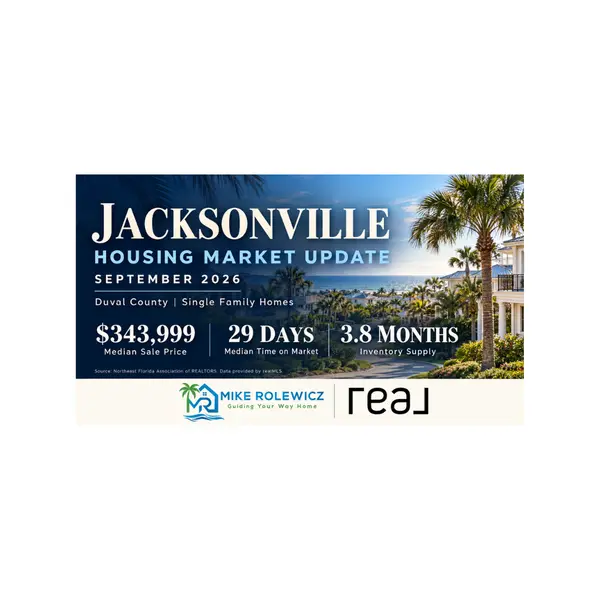
For local context, review our September 2026 Jacksonville housing market update. Those figures describe conditions before the amendment passed and do not measure its impact.
If you are considering when to purchase, our article on buying in Jacksonville now versus waiting until 2027 discusses additional timing considerations.
What Should You Do Now?
Start with a review specific to your property and circumstances.
-
Confirm your recorded homestead status.
-
Verify residency and exemption eligibility.
-
Review assessed value, school taxes, non-school taxes, and separate assessments.
-
Request a fresh estimate if you plan to purchase.
-
Ask your servicer how future tax changes will affect escrow.
-
Follow implementation guidance from your county property appraiser.
The Duval County Property Appraiser’s tax estimator explains its assumptions and limitations. Confirm whether it reflects the amendment before relying on a calculation.
Understand the Changes Before Your Next Move
Amendment 3 creates potential relief for qualifying homeowners and changes worth reviewing for buyers, second home owners, and investors.
The most useful next step is understanding how the rules apply to your situation.
Mike Rolewicz with Real Broker, LLC can help you evaluate your Jacksonville real estate plans and coordinate property specific questions with the appropriate professionals.
Contact Mike Rolewicz to discuss buying, selling, or planning your next move in Northeast Florida.
Additional perspective: Alex with Market Distillery, “Changes are coming for property taxes!” dated November 4, 2026. Market Distillery’s savings estimate is a general projection, not an individual tax calculation.
This article provides general real estate information. Confirm exemption eligibility, filing requirements, and tax calculations with your county property appraiser.
Categories
Recent Posts